A stream of consciousness directed look into things I find cool (movies, music, tv, comics, books, and more)
Showing posts with label 1970s. Show all posts
Sunday, October 17, 2010
Film Review - The Heartbreak Kid (1972)
The Heartbreak Kid (1972, dir. Elaine May)
Starring Charles Grodin, Cybil Shephard, Jeannie Berlin, Eddie Albert
If you have only seen the 2008 remake of this film, then you are missing out. Where the Ben Stiller-driven version works to make you actively dislike his bride and everything is wrapped up in a nice neat package, Elaine May's film makes Lenny a completely narcissistic prick. The result is a very dark, clever comedy that ends on a note of ambiguity. Unlike most comedies, this will remain in your head for a long time, thinking about what the result of this character's choices will be. This is also the best performance from Charles Grodin I have ever seen, turning his smarmy asshole persona up to high.
Sunday, September 19, 2010
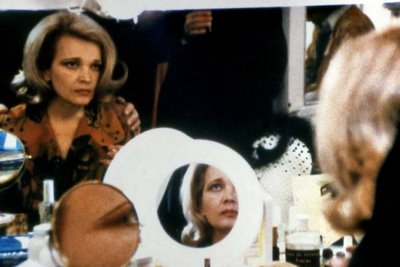
Director in Focus: John Cassavetes - Opening Night
Opening Night (1977)
Starring Gena Rowlands, Ben Gazzara, John Cassavetes, Joan Blondell
Some times you just want to punch Cassavetes in the face. His actors always give their all, but Cassavetes, as director, has a very hard time focusing his films. I'd hate for it to be my conditioning by contemporary cinema to be keyed into a storytelling formula, I have to say I enjoy a lot of the less plot focused directors of the independent cinema (Terence Malick comes to mind). However, Cassavetes has a big problems shaping his films into some thing at all. Its like a sculptor who keeps changing their mind as they chip away at large stone monolith, and the end product is more like the rock he started with than an enjoyable film. Rowlands is great, she always is, but in the end the film is a few moments of genius mired in a pit of dragging.
Sunday, September 12, 2010
Director in Focus: John Cassavetes - The Killing of a Chinese Bookie
The Killing of a Chinese Bookie (1976)
Starring Ben Gazzara, Seymour Cassel, Timothy Carey
Cassavetes was doing for cinematography and story pacing what Mamet attempts to do with language: try to make it so real it can be almost unbearable some times. Stories are not told in beats and there are no real "plots". Cassavetes is interested in character studies, without any real arcs. Just a slice of this characters life, and in his later works the slice included a definitive moment. Here Cassavetes is reunited with Ben Gazzara whom he last worked with on Husbands. Gazzara is giving an understated performance to match the understated filmmaking of Cassavetes. When I watched this film I went with the Director's Cut, released in 1978 and preferred by Cassavetes himself. The original cut was 134 minutes compared to the DC's 108 minutes. When it comes to Cassavetes more is not necessarily better because he is always allowing his camera and scenes to meander until they figure out where they want to go.
Sunday, August 22, 2010
Director in Focus: John Cassavetes - Minnie and Moskowitz
Minnie and Moskowitz (1971)
Starring Seymour Cassel, Gena Rowlands, John Cassavetes, Timothy Carey, Val Avery
The first time I ever remember being aware of Seymour Cassel was in Wes Anderson's Rushmore. When I look back, I realize it was one of those instances where an actor has an incredibly distinguished career in film, but, because its not mainstream cinema, you don't discover them until they appear in a contemporary movie. In Anderson's films Cassel is so muted, always a background player, with not much to do. In Cassavetes' Faces, Cassel plays a young hipster, and this is that same character a few years down the road, a little older, but still full of energy and oddity. This is also the first (but definitely not last) film where we get to talk about Gena Rowlands, Cassavetes wive and figurehead of independent cinema in her own right. This is a film where we start to see the cinéma vérité elements pushed away for just a little bit more structure.
Wednesday, June 30, 2010
My 40 Favorite Film Moments - Part 8
35) The Wedding of Kermit and Piggy (The Muppets Take Manhattan, 1984, dir. Frank Oz)
It will never be a canonical great moment in cinema, but for me as a little kid it was the perfect ending to the Muppet film trilogy. You get an insanely large cast of characters, including those from just around the block on Sesame Street. Also, Piggy's laugh when Kermit asks about Gonzo still cracks me up.
36) Pure Imagination (Willy Wonka and the Chocolate Factory, 1971, dir. Mel Stuart)
Gene Wilder in the 1970s is always perfection. And this song works perfectly to introduce us to the inner working of the fantastical chocolate factory.
37) You're Shit (Happiness, 1998, dir. Todd Solondz)
One of the most funny and depressing movie openings ever.
38) Chance Enters The World (Being There, 1980, dir. Hal Ashby)
In Peter Sellers' final performance he gave us the best film of his career. The mentally challenged Chance is forced to leave the brownstone for which he gardened after the owner dies. It's implied Chance was the owner's illegitimate son, and he never left the house in his life. This scene is gorgeous piece of comedy following Chance on his first day out.
39) Sardine? (The 'Burbs, 1988, dir. Joe Dante)
This film was watched endlessly in my house as a child, and I think it is still one Tom Hanks' best comedies and criminally underrated. This is the perfect scene of awkwardness as the characters meet the neighbors they suspect are serial killers
40) Starchild (2001: A Space Odyssey, 1968, dir. Stanley Kubrick)
The most hopeful film ending of all time!
It will never be a canonical great moment in cinema, but for me as a little kid it was the perfect ending to the Muppet film trilogy. You get an insanely large cast of characters, including those from just around the block on Sesame Street. Also, Piggy's laugh when Kermit asks about Gonzo still cracks me up.
36) Pure Imagination (Willy Wonka and the Chocolate Factory, 1971, dir. Mel Stuart)
Gene Wilder in the 1970s is always perfection. And this song works perfectly to introduce us to the inner working of the fantastical chocolate factory.
37) You're Shit (Happiness, 1998, dir. Todd Solondz)
One of the most funny and depressing movie openings ever.
38) Chance Enters The World (Being There, 1980, dir. Hal Ashby)
In Peter Sellers' final performance he gave us the best film of his career. The mentally challenged Chance is forced to leave the brownstone for which he gardened after the owner dies. It's implied Chance was the owner's illegitimate son, and he never left the house in his life. This scene is gorgeous piece of comedy following Chance on his first day out.
39) Sardine? (The 'Burbs, 1988, dir. Joe Dante)
This film was watched endlessly in my house as a child, and I think it is still one Tom Hanks' best comedies and criminally underrated. This is the perfect scene of awkwardness as the characters meet the neighbors they suspect are serial killers
40) Starchild (2001: A Space Odyssey, 1968, dir. Stanley Kubrick)
The most hopeful film ending of all time!
Tuesday, June 29, 2010
My 40 Favorite Film Moments - Part 7
31) Dancing Chicken (Strosek, 1977, dir. Werner Herzog)
The final scene of a very odd film about Germans coming to live and work in rural America. Don't ask questions, just experience.
32) I Knew These People (Paris, Texas, 1984, dir. Wim Wenders)
This is a slow burning film, but when it hits it emotional peak (this scene) it devastates you. Harry Dean Stanton has never been better, and Nastassja Kinski is perfection. One of the most over looked films of the 1980s. If you haven't, find this and watch it!
33) He's So Happy, He's Crying (Dirty Rotten Scoundrels, 1987, dir. Frank Oz)
One of the best comedies of 1980s that holds up even today. Steve Martin was still funny at this point, and Michael Caine can even go toe to toe with him. Still makes me laugh.
34) Hope (The Great Dictator, 1940, dir. Charlie Chaplin)
It's not his best film, and its not his best scene, but for me its such a great speech. You can argue that it shouldn't count...but this is my list and I'm putting it on here dammit!
The final scene of a very odd film about Germans coming to live and work in rural America. Don't ask questions, just experience.
32) I Knew These People (Paris, Texas, 1984, dir. Wim Wenders)
This is a slow burning film, but when it hits it emotional peak (this scene) it devastates you. Harry Dean Stanton has never been better, and Nastassja Kinski is perfection. One of the most over looked films of the 1980s. If you haven't, find this and watch it!
33) He's So Happy, He's Crying (Dirty Rotten Scoundrels, 1987, dir. Frank Oz)
One of the best comedies of 1980s that holds up even today. Steve Martin was still funny at this point, and Michael Caine can even go toe to toe with him. Still makes me laugh.
34) Hope (The Great Dictator, 1940, dir. Charlie Chaplin)
It's not his best film, and its not his best scene, but for me its such a great speech. You can argue that it shouldn't count...but this is my list and I'm putting it on here dammit!
Monday, June 28, 2010
My 40 Favorite Film Moments - Part 6
26) I See Now (City Light, 1931, dir. Charlie Chaplin)
City Lights is so simple and perfect. This final scene showcases the fact that, while Chaplin is remembered as a great comedian, he also could tell a story of great emotional depth.
27) Who's The Commanding Officer? (Apocalypse Now, 1979, dir. Francis Ford Coppola)
This is the scene in the film that truly sums up the insanity of war for me. It is the last American outpost in Vietnam and it is a waking nightmare.
28) Forget it Donny, You're Out of Your Element (The Big Lebowski, 1998, dir. The Coen Brothers)
Walter Sobchek is one of the great American fictional characters. There's not much more than that.
29) Ministry of Information (Brazil, 1984, dir. Terry Gilliam)
A wordless scene that conveys all the information we need to know about this bureaucracy through the camera lens. Plus the late composer Michael Kamen inventively uses typewriters as an instrument in the score.
30) Zoe and the Spider (The Sweet Hereafter, 1998, dir. Atom Egoyan)
From a criminally underrated film, this scene features Ian Holm telling his daughter's childhood friend about an incident from the girl's life that metaphorically corresponds to the drug addiction he is trying to save her from now. Beautifully told.
City Lights is so simple and perfect. This final scene showcases the fact that, while Chaplin is remembered as a great comedian, he also could tell a story of great emotional depth.
27) Who's The Commanding Officer? (Apocalypse Now, 1979, dir. Francis Ford Coppola)
This is the scene in the film that truly sums up the insanity of war for me. It is the last American outpost in Vietnam and it is a waking nightmare.
28) Forget it Donny, You're Out of Your Element (The Big Lebowski, 1998, dir. The Coen Brothers)
Walter Sobchek is one of the great American fictional characters. There's not much more than that.
29) Ministry of Information (Brazil, 1984, dir. Terry Gilliam)
A wordless scene that conveys all the information we need to know about this bureaucracy through the camera lens. Plus the late composer Michael Kamen inventively uses typewriters as an instrument in the score.
30) Zoe and the Spider (The Sweet Hereafter, 1998, dir. Atom Egoyan)
From a criminally underrated film, this scene features Ian Holm telling his daughter's childhood friend about an incident from the girl's life that metaphorically corresponds to the drug addiction he is trying to save her from now. Beautifully told.
Sunday, June 27, 2010
My 40 Favorite Film Moments - Part 5
21) I'm Easy (Nashville, 1975, dir. Robert Altman)
In this ensemble cast film, Altman had his actors write and perform their own songs. Keith Carradine plays the third member of a country folk trio who is a bit of a lothario. The women gathered in the Exit/In all believe the song is written for them, when in reality its for Lily Tomlin's character a gospel singer and married mother of two who has been having an affair with the singer. The way the camera works in conjuction with the actors' faces is beautiful.
22)You've Got Me? Who's Got You? (Superman: The Movie, 1979, dir. Richard Donner)
Its by no means the greatest film ever made, but it holds a sentimental place in my heart. And this moment, where Superman makes his public debut is just wonderful. It doesn't take itself too seriously and it doesn't need to be grim n' gritty or "badass". It's just a perfect superhero moment. And I must admit, I've used the flying statistic line many times.
23)Kiss (Cinema Paradiso, 1988, dir. Giuseppe Tornatore)
The film follows film director Salvatore Di Vita, who receives news that his old friend and the village's film projectionist, Alfredo, has died. Salvatore goes home and, through flashbacks, we learn of his friendship with the old man. Alfredo leaves Salvatore a film reel and when he returns home Salvatore watches it. It contains all of those moments deemed inappropriate by the Vatican, which Alfredo had to cut out. He gives them as a gift to his old friend in an incredibly beautiful moment.
24)Always Look on the Bright Side of Life (Monty Python's The Life of Brian, 1979, dir. Terry Jones)
Probably one of the best film endings ever. Where else will you find a chorus of crucified messiahs singing about how life is a load of shit?
25) The Order of Things (Network, 1975, dir. Sidney Lumet)
This is one of the most prescient films ever made. Lumet and screenwriter Paddy Chayefsky are modern day prophets. This scene has Howard Beale, a 1970s era Glenn Beck who has been allowed be all crazy up until he criticizes the capitalist system. He is brought to the corporate owner of the station who puts him in his place.
In this ensemble cast film, Altman had his actors write and perform their own songs. Keith Carradine plays the third member of a country folk trio who is a bit of a lothario. The women gathered in the Exit/In all believe the song is written for them, when in reality its for Lily Tomlin's character a gospel singer and married mother of two who has been having an affair with the singer. The way the camera works in conjuction with the actors' faces is beautiful.
22)You've Got Me? Who's Got You? (Superman: The Movie, 1979, dir. Richard Donner)
Its by no means the greatest film ever made, but it holds a sentimental place in my heart. And this moment, where Superman makes his public debut is just wonderful. It doesn't take itself too seriously and it doesn't need to be grim n' gritty or "badass". It's just a perfect superhero moment. And I must admit, I've used the flying statistic line many times.
23)Kiss (Cinema Paradiso, 1988, dir. Giuseppe Tornatore)
The film follows film director Salvatore Di Vita, who receives news that his old friend and the village's film projectionist, Alfredo, has died. Salvatore goes home and, through flashbacks, we learn of his friendship with the old man. Alfredo leaves Salvatore a film reel and when he returns home Salvatore watches it. It contains all of those moments deemed inappropriate by the Vatican, which Alfredo had to cut out. He gives them as a gift to his old friend in an incredibly beautiful moment.
24)Always Look on the Bright Side of Life (Monty Python's The Life of Brian, 1979, dir. Terry Jones)
Probably one of the best film endings ever. Where else will you find a chorus of crucified messiahs singing about how life is a load of shit?
25) The Order of Things (Network, 1975, dir. Sidney Lumet)
This is one of the most prescient films ever made. Lumet and screenwriter Paddy Chayefsky are modern day prophets. This scene has Howard Beale, a 1970s era Glenn Beck who has been allowed be all crazy up until he criticizes the capitalist system. He is brought to the corporate owner of the station who puts him in his place.
Friday, June 25, 2010
Criterion Fridays - Amarcord
Amarcord (1973, dir. Federico Fellini)
Italy is an incredibly complex landscape. Since World War II they have been through dozens of governmental regimes and even before, there has been a centuries long intermingling of the Vatican and secular government. But these are the issues of adults, and as children we rarely are aware of the intermingling of government and our daily lives. We simply live our lives, and what stands out as monumental to us are those local moments. Federico Fellini returns to the Italy of his childhood here, life on a coastal Italian village where life is told through the observance of the seasons. What he creates is a small town masterpiece, on par with Our Town and Under Milkwood.
Beginning at the start of Spring, Amarcord (meaning "I Remember") follows the denizens of an unnamed village through the course of a single year. The story is told in a series of vignettes, almost like a collection of interconnected short stories that feature recurring characters. The core of the film focuses on Titta, an adolescent coming of age in this particular year, getting in trouble with schoolmates, dreaming about life outside of the constraints of the village, and lusting after the gorgeous women of the town. There is also Gradisca, the most beautiful woman in the village who is never seriously pursued by any of the men in town. There's Aurelio, Titta's father, a local businessman who may or may not be involved in anti-Mussolini activities.
The film is not political, rather anti-establishment of any sort. There is a wonderful series of scenes taking place near the end of the school year where we are presented with a parade of the most outlandish and absurd teachers. This is something Fellini has a real gift for in all his work: casting the most interesting looking actors, who defy the traditional movie star standards. Every actor in this film look like a wonderfully bizarre illustration in a storybook. The flights of fancy the teenaged characters take are also quite amusing, in particular one boy whom dreams of a wedding with his crush during a visit from one of Mussolini's lieutenants. They stand before a floral Mussolini head made for the parade and its mouth moves, delivering the wedding ceremony.
There are also moments of reality that have an equally magical effect. At one point, the townspeople migrate to their small rowboats to go out a few miles from the coast for a chance at glimpsing an massive Italian ocean liner, symbol to all of them in this moment of Italy's hollow power. Another powerful moment occurs during the winter when, during an impromptu snowball fight, large male peacock swoops down from the sky and perches on a fountain in the square. The way the bird is filmed was in such a strikingly brilliant way I found myself unsure of how such a shot was achieved. Amarcord has moments of great humor and aching sadness, and because of its honest love and criticism of its characters it stands as one of the more moving cinematic experiences I have had.
Monday, June 21, 2010
DocuMondays - Dogtown & The Z-Boys
Dogtown & The Z-Boys (2001, dir. Stacy Peralta)
Narrated by Sean Penn
As anyone who knows me well can tell you, I am by no means a sports enthusiast. However, even I know the names Stacy Peralta, Tony Alva, and Jay Adams. I can't say I knew a lot about them before I watched this documentary, but I did know they were big names in the world of skateboarding. In the early 1990s, skate culture was a big deal. I was about 9 or 10 years old and in all of child-focused media you had skateboard bound characters; from Nintendo's Skate or Die to the skateboard bound Michelangelo in TMNT. There was an entire aesthetic movement backing it as well: Chicano graffiti inspired neon clothing is what I remember most vividly. All of that started back in 1971 in South Venice Beach, California.
The story of the Zephyr Skate Team is the story of the class divide in America. The young men and women who skated on Zephyr were children of broken homes who lived in the "wrong side of the tracks" part of Venice Beach. The shoreline there was not one tourists ever visited and its most prominent landmark was the decrepit hulking skeleton of an abandoned theme park. The figures in the film began by surfing amongst the treacherous collapsing roller coasters and pier, and were forced to seek recreation elsewhere as the waves only came in at a very specific time of the day. As a lark they took up skateboarding, which had faded away as a fad in the mid-60s. The invention of polyurethane wheels, replacing the easily chipped and locking up clay ones, allowed the boards to grip the pavement and provide a smoother ride. Thus, many surfing techniques were brought in by the skaters. Basically, the modern skateboarding aesthetic is a direct result of the play these young people engaged in day after day.
The economic conditions of the key figures seemed to be one the largest driving forces. Many of the young men who skated on Zephyr came from homes where the fathers had left or, poor economic conditions resulted in, aggressive and abusive fathers. They found the Jeff Ho Surfboard Shop as a second home, where proprietors Jeff Ho, Skip Engblom, and Craig Stecyk encouraged the skaters to develop their own individual styles of the riding the boards. South Venice was a community envious of the North Venice mansions, and as fate would have it, a heavy drought struck California during the early 1970s. This left a lot of dried out pools and some of the more inventive skaters began to see the similarities between the flourishes and curves of the cement pools and the waves they were used to riding. And so, vertical skateboarding was born, skaters attempting to leave but one wheel touching the very rim of the bowl they rode in.
Much like a VH1 Behind the Music episode, we're given a traditional Rise and Fall story, but what makes it so remarkable is that the key players were all teenagers for both the Rise and Fall portions. Stacy Peralta came out as the most successful, going on to champion and mentor skaters like Tony Hawk. Tony Alva struck out as a very successful entrepreneur, becoming the first skater to break away from the companies and start his own. The saddest of the lot was Jay Adams, whom all the interviewees agree could have been the best in history, but he got caught up in a drug lifestyle that included crystal meth that sent him to some rather difficult places. The film does an excellent job of structuring its narrative, and does everything I want from a good documentary: It causes me to have interest in a subject I have thought little about, tells me an interesting story about very human people, and leaves me wanting to know more.
Sunday, June 20, 2010
My 40 Favorite Film Moments - Part 3
11) Rhapsody in Blue (Manhattan, 1979, dir. Woody Allen)
New York is one of the great mythical cities, in that there is the New York that is real and there is the New York that is a fantasy of our minds. Allen captures this magical New York perfectly in the opening of Manhattan, using classic black and white photography as well as the signature George Gershwin tune.
12) Please Don't Tell My Mother (One Flew Over the Cuckoo's Nest, 1969, dir. Milos Forman)
This was one of the first films to showcase the acting chops of Jack Nicholson, but I like this scene because of the performances Louise Fletcher and Brad Dourif bring to the table. It is rare you see a scene so perfectly acted. All of these actors are at the top of their game.
13) Rabbits Stink! (Gummo, 1997, dir. Harmony Korine)
Its pretty impossible to explain Harmony Korine's Gummo. There really is no plot and the characters fade in and out. However, this scene reminded me of a lot of neighbor kids I knew growing up. So bizarre and so profane. Its gorgeous.
14) He Has His Father's Eyes (Rosemary's Baby, 1968, dir. Roman Polanksi)
Poor Rosemary has gone through a strange pregnancy where her husband and the neighbors in their new apartment are tending to her way too much. Finally, she has the child but when she wakes up its gone. She searches through the apartment, finds a secret door, and the truth about her child's true father.
15) I Know (Empire Strikes Back, 1980, dir. Irving Kershner)
This scene both tells us a lot about Han and had to have been incredibly nerve-wracking for those first audiences who saw it. Once again, John Williams score adds the perfect accent to the whole thing.
New York is one of the great mythical cities, in that there is the New York that is real and there is the New York that is a fantasy of our minds. Allen captures this magical New York perfectly in the opening of Manhattan, using classic black and white photography as well as the signature George Gershwin tune.
12) Please Don't Tell My Mother (One Flew Over the Cuckoo's Nest, 1969, dir. Milos Forman)
This was one of the first films to showcase the acting chops of Jack Nicholson, but I like this scene because of the performances Louise Fletcher and Brad Dourif bring to the table. It is rare you see a scene so perfectly acted. All of these actors are at the top of their game.
13) Rabbits Stink! (Gummo, 1997, dir. Harmony Korine)
Its pretty impossible to explain Harmony Korine's Gummo. There really is no plot and the characters fade in and out. However, this scene reminded me of a lot of neighbor kids I knew growing up. So bizarre and so profane. Its gorgeous.
14) He Has His Father's Eyes (Rosemary's Baby, 1968, dir. Roman Polanksi)
Poor Rosemary has gone through a strange pregnancy where her husband and the neighbors in their new apartment are tending to her way too much. Finally, she has the child but when she wakes up its gone. She searches through the apartment, finds a secret door, and the truth about her child's true father.
15) I Know (Empire Strikes Back, 1980, dir. Irving Kershner)
This scene both tells us a lot about Han and had to have been incredibly nerve-wracking for those first audiences who saw it. Once again, John Williams score adds the perfect accent to the whole thing.
Tuesday, June 15, 2010
Wild Card Tuesdays - Three Days of the Condor
Three Days of the Condor (1975, dir. Sydney Pollack)
Starring Robert Reford, Faye Dunaway, Cliff Robertson, Max Von Sydow, John Houseman
In the wake of Watergate in the early 1970s, a trend began in films made by younger directors towards anti-government conspiracy thrillers. You had the "based on a true story" variety like All The President's Men, the naturalist conspiracy like The Candidate, and the more Hitchcock-ian conspiracy in The Conversation. Here Sydney Pollack takes a crack at adapting a novel to the screen about a man on the more paperwork side of the CIA. It begins with some intriguing moments, but slowly devolves into a formulaic studio picture, only to deliver a very prescient twist.
Joe Turner (Redford) works for the American Literary Society, a front for a group of translators who spend their days literally reading everything and looking for any oddities that could be a way of encoding messages. Turner has discovered such an oddity, a book that was only published in Arabic, Dutch, and Spanish with no logically reason why. He receives a message from his superior telling him the Agency believes it is not of importance. Later that same day a group of men show up and kill all of Turner's coworkers, while he escapes, now on the run. As he delves further into the conspiracy he learns that there is possible a subgroup within the CIA and that he has stumbled upon some vitally important secrets. He uses his technical knowledge and book smarts to stay ahead of his pursuers and eventually learns the reason why his coworkers were murdered.
The conspiracy part of the film is spot on and kept me very engaged. The part of the film that I zoned out during was the very forced love story between Redford and Dunaway. Dunaway was a woman he simply kidnaps to use her car and stay in her apartment. For some reason they inexplicably have sex the first night they meet and she helps me out, despite the implausibility of a person in this situation would do such a thing. Other than the forced romantic subplot (methinks I smell studio intervention), Dunaway has some interesting things to do and is able to move the conspiracy plot along by helping Redford identify the man behind his misery.
Max Von Sydow's German mercenary is a character interesting enough to have his own film, and delivers an interesting speech near the end of the film about the peacefulness of his life, and how his job has a sort of meditative quality. Robertson does a great job as Redford's callous superior and gets to deliver a chilling warning to Redford in the film's final scene. Redford has uncovered the truth of the book translation and why his colleagues were murdered at this point, and Robertson talks about the coming decades in America, and how the unscrupulous actions of the CIA in the present won't be judge by the citizens in the future. Definitely worth a view and will make you think about the state of the world in comparison.
Monday, June 14, 2010
My 40 Favorite Film Moments - Part 2
6) Waiting For a Train (Once Upon a Time in the West, 1969, dir. Sergio Leone)
Wordless, with a soundtrack provided by found objects in the setting. A squeaky windmill, a dripping water tower, the steady rhythm of a steam engine. It provides the perfect introduction to the film's protagonist, Harmonica (Charles Bronson).
7) Getting Baptized (Ed Wood, 1994, dir. Tim Burton)
Hack director Wood has gotten financing from an L.A. church. One of the conditions for the money to come through is that the entire cast and crew of Plan Nine from Outer Space will be baptized. The unaffected homosexual producer Bunny Breckenridge (Bill Murray) takes the hefty spiritual ritual with little thought in a cleverly funny moment. This is also Burton's masterpiece in my opinion.
8) Flowers (Harold and Maude, 1971, dir. Hal Ashby)
Ashby is one of the greats of the 1970s, and this scene featuring Ruth Gordon, Bud Cort, and the music of Cat Stevens is a picture of perfect composition. The transition from the field of flowers to the military cemetery is a very beautiful one.
9) He'll Keep Calling Me (Ferris Bueller's Day Off, 1989, dir. John Hughes)
This scene is a perfect summation of the profound indecision and anxiety Cameron suffers from. Throughout the film, he's a character who is simply pushed around by his off screen father or by Ferris or by authority in general. This is every thing going on in his brain.
10) Make the Sun Rise (Black Orpheus, 1959, dir. Marcel Camus)
Set during Carnival in Brazil, the film retells the mythic story of Orpheus and Eurydice through an Afro-Brazilian guitarist and the woman he loves. In this final scene, we see that the tragic story of these lovers is part of a cycle and this children are beginning to play down a path that is both beautiful, but painful.
Wordless, with a soundtrack provided by found objects in the setting. A squeaky windmill, a dripping water tower, the steady rhythm of a steam engine. It provides the perfect introduction to the film's protagonist, Harmonica (Charles Bronson).
7) Getting Baptized (Ed Wood, 1994, dir. Tim Burton)
Hack director Wood has gotten financing from an L.A. church. One of the conditions for the money to come through is that the entire cast and crew of Plan Nine from Outer Space will be baptized. The unaffected homosexual producer Bunny Breckenridge (Bill Murray) takes the hefty spiritual ritual with little thought in a cleverly funny moment. This is also Burton's masterpiece in my opinion.
8) Flowers (Harold and Maude, 1971, dir. Hal Ashby)
Ashby is one of the greats of the 1970s, and this scene featuring Ruth Gordon, Bud Cort, and the music of Cat Stevens is a picture of perfect composition. The transition from the field of flowers to the military cemetery is a very beautiful one.
9) He'll Keep Calling Me (Ferris Bueller's Day Off, 1989, dir. John Hughes)
This scene is a perfect summation of the profound indecision and anxiety Cameron suffers from. Throughout the film, he's a character who is simply pushed around by his off screen father or by Ferris or by authority in general. This is every thing going on in his brain.
10) Make the Sun Rise (Black Orpheus, 1959, dir. Marcel Camus)
Set during Carnival in Brazil, the film retells the mythic story of Orpheus and Eurydice through an Afro-Brazilian guitarist and the woman he loves. In this final scene, we see that the tragic story of these lovers is part of a cycle and this children are beginning to play down a path that is both beautiful, but painful.
Monday, June 7, 2010
My 40 Favorite Film Moments - Part 1
This month I will be looking at my favorite moments in movies. These are not necessarily the best ever in films, but they are my personal favorites. In no particular order, here we go:
1) Let Me Out (Young Frankenstein, 1974, dir. Mel Brooks)
Gene Wilder is at his best when he goes from calm to frantic in a split second. His red-faced blue blanket tirade from The Producers is a gorgeous moment. This one however goes up there as one of my all time faves. Wilder as the nephew of Victor Frankenstein shines. In this scene we see him go from calm, to manic, to desperate, and finally to confident in his macabre heritage.
2) Mike Yanagita (Fargo, 1996, dir. Joel and Ethan Coen)
Two actors here who deserve a lot more credit. Frances McDormand won the Oscar for her role of Marge Gunderson, but this scene also showcases the chops of Steve Park. Park is able to create a three dimensional character in a single scene of this film, its amazing what he does. Its hard not to imagine the life of Yanagita after watching this. A powerful example of what happens when good writing and acting are paired up.
3) Oh, Are They? (Rushmore, 1998, dir. Wes Anderson)
The film that really broke Anderson out and still one of his best. Max Fischer (Schwartzmann) turns a post opening night dinner into a farce when his love interest invites her male nurse friend along. Would be nice if Anderson tried to go back to his more comedic roots, not that his current work is bad.
4) Binary Sunset (Star Wars, 1977, dir. George Lucas)
It's a short scene, but it says a lot. The dual suns reinforce the alien nature of this world, the lighting sets the perfect tone as Luke Skywalker stares out across the vast landscape of Tatooine, and the music gets across his desire to explore. Simple and perfect.
5) Come Play With Us, Danny (The Shining, 1980, dir. Stanley Kubrick)
A perfect horror movie scene. The music and cinematography are in perfect unison and there isn't much more to say other than, experience the scene yourself.
1) Let Me Out (Young Frankenstein, 1974, dir. Mel Brooks)
Gene Wilder is at his best when he goes from calm to frantic in a split second. His red-faced blue blanket tirade from The Producers is a gorgeous moment. This one however goes up there as one of my all time faves. Wilder as the nephew of Victor Frankenstein shines. In this scene we see him go from calm, to manic, to desperate, and finally to confident in his macabre heritage.
2) Mike Yanagita (Fargo, 1996, dir. Joel and Ethan Coen)
Two actors here who deserve a lot more credit. Frances McDormand won the Oscar for her role of Marge Gunderson, but this scene also showcases the chops of Steve Park. Park is able to create a three dimensional character in a single scene of this film, its amazing what he does. Its hard not to imagine the life of Yanagita after watching this. A powerful example of what happens when good writing and acting are paired up.
3) Oh, Are They? (Rushmore, 1998, dir. Wes Anderson)
The film that really broke Anderson out and still one of his best. Max Fischer (Schwartzmann) turns a post opening night dinner into a farce when his love interest invites her male nurse friend along. Would be nice if Anderson tried to go back to his more comedic roots, not that his current work is bad.
4) Binary Sunset (Star Wars, 1977, dir. George Lucas)
It's a short scene, but it says a lot. The dual suns reinforce the alien nature of this world, the lighting sets the perfect tone as Luke Skywalker stares out across the vast landscape of Tatooine, and the music gets across his desire to explore. Simple and perfect.
5) Come Play With Us, Danny (The Shining, 1980, dir. Stanley Kubrick)
A perfect horror movie scene. The music and cinematography are in perfect unison and there isn't much more to say other than, experience the scene yourself.
Friday, May 28, 2010
The Summer Blockbuster: 1975 - 1985
It began with a great white shark.
It wasn't until the mid-70s that the concept of summer being a time to release big budget, special effects driven pictures came into the zeitgeist. Looking at the current wave of summer movies, its easy to see that science fiction and fantasy dominate, but back in the 1950s and 1960s the majority of these genre films were low budget and full of poor acting. The novel Jaws by Peter Benchley was purchased by Universal in 1973 and went through two directors before the studio settled on the relatively green Steven Spielberg. Universal's first choice had been John Sturges (The Magnificent Seven) and then Dick Richards, who was fired after continually referring the shark as "the whale".
To Universal, Jaws was going to be a successful film, but they never expected to be as huge a hit as it became. On June 20th, 1975 the picture was released nationwide, meaning it opened in Los Angeles and New York as well as smaller venues across the country. In the past, a film would open in a larger market and slowly spread across the country. Many film historians see this business move as the one that ensured Jaws' success. Up to this point the late 1960s and early 1970s had been dominated by artist driven pictures, and the studios had given up the reigns to young and headstrong young directors with a vision. Directors like Bob Rafelson (Five Easy Pieces) and Hal Ashby (Harold and Maude) had been the kind of filmmakers producing studio pictures, something very unlikely even today. In many ways, by using Spielberg, a contemporary of these young directors, but saddling him with a very studio controlled and non-character driven film, the studios were attempting to reassert their control. But the success of Jaws was nothing compared to Star Wars' release two years later.
There's not much to say about Star Wars that isn't well-known already. George Lucas, after establishing himself with American Graffiti and THX-1138, released his science fiction epic using the tropes of the serialized films of his childhood. Unlike Jaws, Lucas didn't have a plethora of studio support behind his film and clashed with his crew, who were veterans of the film industry while Lucas was seen as an upstart. After missing its Christmas 1976 release, 20th Century Fox moved it to May 1977. Early director's cuts were screened for Lucas' friends, including Brian de Palma and Steven Spielberg and their reactions were disappointing. Every thing seemed to be pointing at Star Wars being a colossal failure. Lucas finally screened the picture to 20th Century Fox executives and was shocked. They loved it. One executive admitted to crying during the film at how beautiful it was, and Lucas was completely blown away from getting studio approval on a film for the first time in his career.
However, instead of becoming a studio lackey, Lucas began to build his own quiet corner of the film industry and cleverly established production facilities for sound and other technical aspects of film to create a financial safety net. Filming for The Empire Strikes Back began in 1979, with Lucas letting Lawrence Kasdan direct while Lucas supervised as producer. While the budget for Star Wars has been $11 million ($3 million over budget), Empire had a pool of $18.5 which, after a studio fire, became $22 million. Lucas always seemed to be struggling with the limitations of the contemporary technology to realize his vision. It can be seen in the concept art of Ralph McQuarrie, that Lucas wanted to make something so expansive and ground breaking. It wouldn't be till 1999's The Phantom Menace that he got his wish, while audiences felt the heart of the series was lost amidst masturbatory world building.
For most of the 1970s and 80s, Spielberg and Lucas dominated the summer movie. Spielberg went on to give us Close Encounters of the Third Kind and E.T. He then teamed with Lucas to create the Indiana Jones franchise, a film series that seemed to up the ante in terms of character based blockbusters. Harrison Ford has said in interviews that he is always much more eager to play Indiana Jones again, than Han Solo. With Indiana Jones and the Temple of Doom, Hollywood underwent a change that would shape the industry for decades to come. The level of violence in Temple challenged the MPAA's standards and Spielberg desperately didn't want the film to be slapped with the death sentence of an R rating. These Spielberg/Lucas films depended greatly on the viewer-ship of young audiences, particularly for the merchandising tie-ins. As a compromise, the MPAA invented the rating of PG-13.
One year after Temple, Spielberg released the Robert Zemeckis-directed Back to the Future, a film that combined special effects driven sci fi with the teen comedy. The film proved that you didn't have to have Spielberg or Lucas directing a film to make it a huge success. Both Zemeckis and screenwriter Bob Gale were terrified that the film had not lived up to their vision and figured it would bomb. Audiences went crazy for it however, and critic Roger Ebert pointed out that at its core it shared a lot of thematic similarities with the beloved It's A Wonderful Life. As we entered into the mid-80s, Lucas began to fade from the scene as a director and Spielberg would continue to top the grossing-lists. However, there were now a group of directors moving in to prove their own ability to pull audiences in.
Next: 1986 - 1995: Gump, Disney, and Ahnold.
It wasn't until the mid-70s that the concept of summer being a time to release big budget, special effects driven pictures came into the zeitgeist. Looking at the current wave of summer movies, its easy to see that science fiction and fantasy dominate, but back in the 1950s and 1960s the majority of these genre films were low budget and full of poor acting. The novel Jaws by Peter Benchley was purchased by Universal in 1973 and went through two directors before the studio settled on the relatively green Steven Spielberg. Universal's first choice had been John Sturges (The Magnificent Seven) and then Dick Richards, who was fired after continually referring the shark as "the whale".
To Universal, Jaws was going to be a successful film, but they never expected to be as huge a hit as it became. On June 20th, 1975 the picture was released nationwide, meaning it opened in Los Angeles and New York as well as smaller venues across the country. In the past, a film would open in a larger market and slowly spread across the country. Many film historians see this business move as the one that ensured Jaws' success. Up to this point the late 1960s and early 1970s had been dominated by artist driven pictures, and the studios had given up the reigns to young and headstrong young directors with a vision. Directors like Bob Rafelson (Five Easy Pieces) and Hal Ashby (Harold and Maude) had been the kind of filmmakers producing studio pictures, something very unlikely even today. In many ways, by using Spielberg, a contemporary of these young directors, but saddling him with a very studio controlled and non-character driven film, the studios were attempting to reassert their control. But the success of Jaws was nothing compared to Star Wars' release two years later.
There's not much to say about Star Wars that isn't well-known already. George Lucas, after establishing himself with American Graffiti and THX-1138, released his science fiction epic using the tropes of the serialized films of his childhood. Unlike Jaws, Lucas didn't have a plethora of studio support behind his film and clashed with his crew, who were veterans of the film industry while Lucas was seen as an upstart. After missing its Christmas 1976 release, 20th Century Fox moved it to May 1977. Early director's cuts were screened for Lucas' friends, including Brian de Palma and Steven Spielberg and their reactions were disappointing. Every thing seemed to be pointing at Star Wars being a colossal failure. Lucas finally screened the picture to 20th Century Fox executives and was shocked. They loved it. One executive admitted to crying during the film at how beautiful it was, and Lucas was completely blown away from getting studio approval on a film for the first time in his career.
However, instead of becoming a studio lackey, Lucas began to build his own quiet corner of the film industry and cleverly established production facilities for sound and other technical aspects of film to create a financial safety net. Filming for The Empire Strikes Back began in 1979, with Lucas letting Lawrence Kasdan direct while Lucas supervised as producer. While the budget for Star Wars has been $11 million ($3 million over budget), Empire had a pool of $18.5 which, after a studio fire, became $22 million. Lucas always seemed to be struggling with the limitations of the contemporary technology to realize his vision. It can be seen in the concept art of Ralph McQuarrie, that Lucas wanted to make something so expansive and ground breaking. It wouldn't be till 1999's The Phantom Menace that he got his wish, while audiences felt the heart of the series was lost amidst masturbatory world building.
For most of the 1970s and 80s, Spielberg and Lucas dominated the summer movie. Spielberg went on to give us Close Encounters of the Third Kind and E.T. He then teamed with Lucas to create the Indiana Jones franchise, a film series that seemed to up the ante in terms of character based blockbusters. Harrison Ford has said in interviews that he is always much more eager to play Indiana Jones again, than Han Solo. With Indiana Jones and the Temple of Doom, Hollywood underwent a change that would shape the industry for decades to come. The level of violence in Temple challenged the MPAA's standards and Spielberg desperately didn't want the film to be slapped with the death sentence of an R rating. These Spielberg/Lucas films depended greatly on the viewer-ship of young audiences, particularly for the merchandising tie-ins. As a compromise, the MPAA invented the rating of PG-13.
One year after Temple, Spielberg released the Robert Zemeckis-directed Back to the Future, a film that combined special effects driven sci fi with the teen comedy. The film proved that you didn't have to have Spielberg or Lucas directing a film to make it a huge success. Both Zemeckis and screenwriter Bob Gale were terrified that the film had not lived up to their vision and figured it would bomb. Audiences went crazy for it however, and critic Roger Ebert pointed out that at its core it shared a lot of thematic similarities with the beloved It's A Wonderful Life. As we entered into the mid-80s, Lucas began to fade from the scene as a director and Spielberg would continue to top the grossing-lists. However, there were now a group of directors moving in to prove their own ability to pull audiences in.
Next: 1986 - 1995: Gump, Disney, and Ahnold.
Monday, May 17, 2010
DocuMondays - Koko: A Talking Gorilla
Koko: A Talking Gorilla (1978, dir. Barbet Schroeder)
I have faint memories of being a little kid and seeing video of Koko the gorilla and her cat/adopted child All Ball. I also remember seeing Dr. Penny Patterson with Koko and years later came across an article that reminded me I was familiar with this story already. Now, as an adult, I go back to where the story began, the days before Koko was an internationally known figure and simply part of study at Stanford to teach a gorilla sign language. What she became is a mirror to put our own ideas of personhood and intelligence up against.
Koko was born in captivity in the San Francisco Zoo. She was lent to Stanford, but as the movie explains, she was kept past the agreed upon stay and things between the zoo and the college got very tense. Dr. Patterson, 28 at the time of the documentary, bonded with Koko deeply, and shows an obvious maternal instinct with the ape. Director Schroeder explains in the film that the entire documentary had to be kept quiet, lest the zoo contact authorities to have Koko removed.
Koko is shown going about her daily routine with Patterson, who we are told has to be there when Koko wakes up and when she falls asleep to keep their bond airtight. Patterson has in effect devoted her entire life to the care and development of Koko, same as a devoted parent to a child. Patterson even disciplines Koko with a fearlessness that shows an absence of distinction between man and ape. For us laymen, should a gorilla misbehave we would try to back out of the room slowly. For Patterson, she actually strikes Koko to reprimand her for tearing up her room.
The evidence in support of Koko being considered a "person" with the rights that come inherent to that is her ability to apparently synthesize language. She knows 1,000 American Sign Language signs and 2,000 words of spoken English. For objects she has no words for, Koko has shown the ability to merge two signs to describe the object. She had no word for "ring" so she called it "finger-bracelet". She had no word for "duck" so it became "water-bird". Fairly impressive. While there can be valid arguments back and forth about Koko being a person or not, I found Patterson's wish that Koko not be seen as something that could be owned a statement I would be in support of. The zoo sees Koko as their property, Patterson sees Koko has her child. Both may be a little presumptuous in their ideas of Koko. Once an animal gains the ability to use a human developed language to communicate it should cause us to step back and question many things. If Koko expressed a desire to leave both Stanford and the zoo, would she be granted this request?
A very thought-provoking documentary from one of the premiere documentary makers. Barbet Schroeder, much like the Maysles or Barbara Kopple, is not a character in his own film, but an observer. We hear the occasional question, but the subjects are truly the focus of his work.
Tuesday, April 20, 2010
Wild Card Tuesday - The Last Days of Disco
The Last Days of Disco (1998, dir. Whit Stillman)
Starring Chloe Sevigny, Kate Beckinsale, Robert Sean Leonard, Mackenzie Astin, Chris Eigeman, Tara Subkoff, Matt Keeslar, Jennifer Beals
If watching the burgeoning yuppies of early 1980s Manhattan sitting around vapidly waxing philosophic about the inanities of their lives doesn't sound appealing to you then you may want to skip this film. Despite its title its not at all about disco really. Its about a generation of people who came of age in the 1970s and are focused on self-gratification and the hierarchies and status related to social life in New York. Another of way of looking at it, and how director Whit Stillman was thinking when he made the film, is that this is contemporary take on the comedy of manners genre.
The protagonists of the film are Alice (Sevigny), a recent college grad and an assistant publishing editor and Des (Eigeman), the employee of a disco club which bears a more than passing resemblance to Studio 54. Alice balances a tenuous friendship with snarky roommate Charlotte (Beckinsale) and ending up in awkward social situations with immature men. One of these men is a manic-depressive FBI agent (Keeslar) who becomes a part of a sting on Des' nightclub which has been funneling cash to a Swiss bank account and failing to report millions the IRS. The characters meander through the film, talking in a completely artificial manner and nothing really seems to happen.
It's apparent that Stillman's work (Metropolitan, Barcelona) had a profound impact on the filmmaking of Wes Anderson and Noah Baumbach. Stillman's characters aren't so much people as they are roughly painted facsimiles of humans who carry on in conversations peppered with Tarantino-esque pop culture references. One character explains that the reason why so many of his own generation are environmentalists is because of the 1958 re-release of Bambi in theaters. Another conversation involves how Lady and the Tramp teaches women to pursue the bad boy and is at fault for a multitude of bad relationships in their generation.
The characters are dull as hell though. They barely even qualify as characters, as Stillman loves introducing a new and even quirkier one as the film progresses. Yet we get nothing past their surface eccentricities and Stillman struggles to manage any sense of a narrative. He tries to create a partial drama with the illegal business practices of the nightclub but even when the arrests go down all parties involved seem aloof and uninterested. The first hour of the film has potential but the second goes off the rails and becomes a chore to wade through. Much like the decade it highlights the start of, its incredibly shallow with nothing to really say.
Saturday, March 27, 2010
Seventies Saturdays - Little Big Man
Little Big Man (1970, dir. Arthur Penn)
Starring Dustin Hoffman, Faye Dunaway, Chief Dan George, Martin Balsam, Richard Mulligan
At the height of the conflict in Vietnam, American filmmakers were ensconced in counter-cultural material. The 1970s were also a renaissance period in American cinema as well, influenced particularly by the French New Wave of the 1960s. Both social and aesthetic revisionism is at the heart of Arthur Penn's adaptation of this novel, which results in a film that is both clever and funny, and at other times muddy and unsure of itself.
As a young boy, Jack Crabb's family are massacred by Indians, however he and his sister are rescued by the friendly Cheyenne. Jack grows up amongst the Indians and eventually is pulled into the white man's world, where is to be properly educated in good Christian morals. For the rest of Crabb's life he goes back and forth, between being a "civilized white man' and a "savage Cheynne". A sort of Western Expansionism Forrest Gump, Crabb runs across historical figures like Wild Bill Hickok and General Custer, the latter of whom he serves under three separate times.
Penn allows the Cheyenne to speak in plain English, but within the rules of the film, its their native tongue translated so that we may hear. This was a big change in film at the time, as Indians had been portrayed as speaking in broken English and using tired, clichéd phrases. However, the film does fall into some common cliches of another kind when dealing with the tribe's single homosexual member, who's portrayed as a limp-wristed effeminate dandy. It would have been more interesting to have a common brave amongst the tribe end up being attracted to his fellow warriors.
The film is infused with a biting sense of humor, and definitely plays up the common myths of the frontier for laughs. General Custer, historically known for being pompous and grandiose, is played wonderfully by Richard Mulligan. Dustin Hoffman does a very convincing job as Jack Crabb, and shines particularly in the physical comedy gags. At one point he operates as a gunslinger (The Soda Pop Kid), and has a nervous encounter with Wild Bill, which highlights the small stature of Crabb. It's a very fun film, that rushes over so much, and that it keeps it from becoming a true classic.
Saturday, March 20, 2010
Seventies Saturdays - The Great White Hope
Starring James Earl Jones, Jane Alexander, Lou Gilbert, Joey Fluellen
Based on the Pulitzer Prize winning play, The Great White Hope is a "names changed" version of the career of Jack Johnson, an African-American boxer during the early 20th century. Johnson was the first black heavyweight boxing champion and was known for patiently waiting for his opponent to slip up, then barraging him with a series of incapacitating blows. Johnson was a figure of great controversy, not just because he was a threat to the white male ego in the boxing ring, but because all of the women he became seriously involved with were white. Johnson showed little sense of humility about his dealings and was one of the first public figures to really use controversy as a way to promote his own celebrity.
In the film, Jack Jefferson (Jones) has just defeated the heavyweight champion and is celebrating this achievement with much bravado. The African-American community is divided about Jefferson though. While those around him immediately after the fight revel with him and dance in the streets, there are others who see Jefferson has creating negative image for their people because of his brazeness. Another group see Jefferson as being nothing but an "uncle tom" by consorting with white women and embracing what they see as a white way of life. Jefferson has an interesting take on all of this. In a scene early on, after he is weighed in before the big bout, an older black gentleman mentions that the young men will be inspired and "proud to be colored" when Jefferson wins. The boxer replies that they should already be proud and his winning or losing should have nothing to do with it. An interesting idea when thinking about the role of athletes as "role models" in contemporary society.
Jefferson and his fiancee, Eleanor's relationship is played very well, but we don't get enough background to understand how they came together. They are very much in love, but we're never shown how, despite the social stigma of their relationship, they would defy it and stay together. The film also has some problems with how broadly a lot of characters are played. The white establishment villains literally "bwahahaha" at one point in the final scenes, and it would have been interesting to see them played with more internal conflict. Jane Alexander's performance as Eleanor is also ruined by the pointless turn her character is forced to take, mainly to serve as momentum to move Jefferson forward to the finale. The one standout performance is James Earl Jones as Jefferson; he plays the character as incredibly multi-layered. Jefferson is charming and intelligent, but also selfish and arrogant. He loves Eleanor deeply but is resentful when he realizes she'll never understand the limitations put on him.
Saturday, March 13, 2010
Seventies Saturdays - Johnny Got His Gun

Johnny Got His Gun (1971, dir. Dalton Trumbo)
Starring Timothy Bottoms, Jason Robards, Donald Sutherland
Here we have a film directed by the author of the novel on which is based. This author, Dalton Trumbo was investigated by the FBI as a result of the novel's publication, and later blacklisted during the McCarthy Communist witch hunt. While blacklisted, he was given his widest recognition as the screenwriter of Stanley Kubrick's Spartacus. And it was during the twilight of the Vietnam War he decided to adapt his controversial novel. While on the surface, the film is condemnation of war by how it treats the men on the frontlines, Trumbo is expanding his theme to comment on the fragility of life and man's right to die with dignity.
Joe Bonham (Bottoms) is introduced as a body under a sheet. He's not dead, but was shredded by shrapnel from a mortar shell fired on the last day of World War I. The doctors maintain an unrealistically upbeat outlook and have Joe put in a utility room so as not to upset the other wounded men. We learn who Joe is through the meanderings of his consciousness now in this eternally paralyzed state. The horror of Joe's condition is unfolded to us gradually: first they take his arms, then his legs, ultimately he learns his face has been scooped out. All that exists is a screaming mind in a paralyzed frame.
As Joe tries to make sense of this in his mind, he returns to moments with his late father (Robards) and consults with a Jesus of his own invention (Sutherland). His memories begin as real events in his past and morph into surreal fantasies about his loss. One of the most touching moments of the film comes early on. On Joe's last night before shipping out, he and his teenaged girlfriend decide to have sex for the first time. This scene is played with such beauty and tenderness. Every nervous movement is captured perfectly, and the scene aches with a bittersweet sense of how these characters are experiencing such great joy, a joy that inevitably will die.
The genius of the film is that it never takes political sides. In essence, it truly supports the troops, because it is all about them. Joe is a child who was sent off by old men who use their children to fight wars. He did his duty and suffered great wounds. And now, with no future besides being a lump of meat locked in a closet, he is denied a basic right to have his life ended. Joe eventually figures out a means of communicating with those around him, only to find his new voice stifled and the realization that the people around Joe, because of their own fears of death, want to simply forget that he ever existed.
Subscribe to:
Posts (Atom)